
PSYCHO 3


 Spotify

 Apple Podcasts

 Castro

 RSS Feed
This week Mike, Stephen, and Brian are joined by Kinnell of Sinister Cinema to talk about the trashy fun of Psycho 3. Coming at the tail end of the slasher craze of the 80s, just as horror cinema was starting to cash in on repetitive sequels, this one ramps up the gore, the kills, the sex, and the camp or something that was way too overlooked and underappreciated upon its release in 1986. While it lacks the finesse of Hitchcock's classic, it remains a un, lurid watch.
Like what you're hearing? Please rate, review & subscribe to us on Apple Podcasts (or wherever you get your shows) so more people can discover us.
Follow us on Twitter: @podandpendulum
Become a patron today for more bonus content and full length exclusive episodes: patreon.com/podandthependulum
0:30 Hey there everyone and welcome to the pod and the Pendulum. We are the podcast that covers all the horror franchises one movie and one episode at a time. As always, I'm your host Mike Snooning and I am joined by a litany of Co hosts and special guest. Today we have enough to rent a few cabins at the Bates Motel for the big football game. Up first you know him is Mr. Chewy Walrus, Mr. Steven Foxworthy. How are we today? Doing great, Mike. My friends call me Chook though, so you can call me Chook please. Absolutely. I don't think I will be doing that because I feel like I would accidentally turn it into a slur and get cancelled.
1:12 Knowing my ways of mispronouncing things accidentally, I don't want to do that, so I. I appreciate the amount of self-awareness that you've managed to to get over the course of this show, Mike. That's really heart warming for me. This is. Really, my therapy, like this show is my Pennant show therapy. Also joining us from the podcast Holy Terrors, as well as the sights Bloody Disgusting Manor, Vellum and others. Mr. Brian Kuiper, how are we? Well, I just got to echo Jeff Fahey and say watch the guitar. Watch the guitar. Are you going to pull out a guitar at some point? Like when we just just reach. Off to the side and pull up. A guitar used to have my guitars in here with me, but I don't right now.
1:54 Well, listeners in side notes that are interesting to only us, like off mic, we were talking about no other, no other choice. And at one point we talked about thirst and who's seen it. And Brian immediately reached over and pulled it out like he always does. He just does it again. It's kind of, it's really bizarre. It's a superpower at this point. But also joining us, we have a special guest today from over the pond. He's returning. He has a soft spot for this type of movie from Sinister Studios. Canal How are we? It's all good, just pulled up in my car and the trunk is full of different colour light bulbs to put in my hotel room.
2:39 Love it. It's like my mood. Love it. Before we begin, Brian, how many Confederate flag stickers do you have on your guitar? Valid question. That will be 0. OK, just checking. That's what I thought the answer was going to be. That's. What I was hoping anyway, yeah. If if you had said seven and the South will rise again, it would have gotten really uncomfortable. It would have been a real short episode. You know what it would have been? It would have been. It would have been probably not knowing us, this would have been really awkward. So Canal, here's my question for you, my friend, since you're on for us for the first time with this series. Like, what is your relationship with Like Psycho is a franchise and what made you want to come on for Psycho 3 specifically? Psycho 3 is actually the first one of the franchise that I saw. Same.
3:30 Not like like I I love this franchise, like flipping that. Like I wouldn't say that like 2 is the wash record. I wouldn't say that 3 is necessarily like the best of the franchise, but it might be the one that I enjoy rewatching the most. Sure. I know I saw this when I was a teenager and I think I what we call it, I was familiar with the soundtrack before I was familiar with the with the what we call like the actual film, because this was sampled by UK artist called Aim on a Cold War Music, which was an album I was really I was really, really into.
4:14 What did they sample from it? The theme tune that. OK. That thing and like I wasn't like the first time I watched the film. I think I was in uni with my mates and I wasn't even planning on watching a film, but I just heard those like first two notes and like I just sat down and watched the whole thing and I've seen the rest of the series since like and flipping obviously, like the first ones, like very iconic, you know, not like it cannot be stressed enough how iconic Psycho is. The second one kind of did the impossible by like producing a great legend legacy sequel to to a legendary piece of cinema.
5:01 And so I was recall it three. It might not be on those levels, but flippin it's a lot of fun. It does a lot more than it Poss. It'd be very easy for this to not do enough. I'd like it'd be very easy to make this a film that doesn't have anything interesting happening, and there's interesting stuff happening in this. Film one thing I really like that you said there was you made the distinction between what is like the technically best movie in a series and what is like the personal favorite or sometimes like the most were watchable one to like an individual because sometimes like those are two different things.
5:42 Like you can say yes, like tech on a technical level. You know, Mako is like such a great achievement and but for others, like the kind of bleak camp that this kind of goes into sometimes like has a lot of appeal to it for certain folks and it's like a very watchable movie. It's a very fun movie that also is well made. Like this is not a poorly made movie by any strange. So how about yourself, Steven? I think you were on the record before covering the franchise. Like on your previous show you had said what about the Psycho sequels? You're going to make me relive this every week.
6:22 OK, I see. I mean, this is my penance. So yes, I made a what I referred to last week as an ignorant statement, which it was, in which I said, quote, the Psycho sequels all suck, which made both my friend Tucker and my friend Brian very angry with me. And of course I said that without having seen any of them. I was going to ask, how many of the sequels had you watched? None, exactly none. I was going off of just vibes. OK. Which is a bad thing to do for me in particular, but I have since, as of last week, recanted that statement as Psycho 2 is, quote, good. Actually, this one I think is fine. I would say less good. It felt a bit perfunctory to me. I'm sure we'll get into all of that as we go. But there is I.
7:05 I'm going to echo Canal. There is some interesting stuff happening here. Whether or not it is of interest to me is a different thing entirely, but I will consent that it is interesting or concede rather that it is interesting. So I think there's a lot to talk about and I'm interest. I'm looking forward to talking about it with you gentlemen. So there we have that. Excellent, excellent. Brian, I know there's some things that are of interest for you in here, and I'm kind of curious, like, would Psycho 3 qualify as a future episode of Holy Terror? No. I'm sorry you guys froze up for a second. There. OK, we'll take that again. Edit and we'll take that again. So, Brian, what I'm interested in is like, I know there's going to be some things here that are of interest for you and like, would this possibly qualify in the future for like an episode of Holy Terror?
7:55 Absolutely. Yeah, it's probably already on the list, but this was also a movie that Michelle and I covered on Movies for Life because we decided to pick, you know, sort of our underappreciated horror sequels episode. So we covered Friday the 13th Part 5A, New Beginning and Psycho 3 together, and that actually made a hell of a double because they both have that similar sort of sleaze to them, which I think I'm a sucker for because boy do I love it. I will fully admit that both Psycho, of course, and Psycho 2 are better films like, you know, more important, I suppose this one is just fun as hell.
8:44 And yeah, I agree with Canal that this is probably, I've watched Psycho, the first one more than any of the others, but this is the one that in recent years I've probably watched the most because it's, I don't know, I just have a great time with this. I, I, I would, it was because I decided to write about it, you know, five years ago or so for its last anniversary. And it was like, oh man, this movie's got some kind of cool stuff going on technically as well as like visually. So for a first time director like Anthony Perkins to kind of take all of the things that he's gleaned from these other film makers he's worked with and film makers he admires clearly and put them into his psycho.
9:41 I don't know. I, I love that that he did that. I know he didn't get a lot of opportunities to direct because this movie was not successful, but it's a shame because he has kind of an instinct. I, I would have loved to see him direct a movie that he didn't also have to star in. You know, I, I think that he really could and really could have put all his energies into directing the film. I think would have. I think he could have made something really special. The lighting in particular in this and canal you've mentioned, like the different color light bulbs that are loaded in the back of your the back of the trunk for this. But I think some of the lighting here is gorgeous. And then there are moments like there is one moment in particular when like Jeff Fahey is like standing against like the backdrop of the skyline, like list leaning against one of the support beams of the motel where the lighting of his like eyes, like it's kind of reminiscent of like Kim Novak in Vertigo, like when you first see her, the way he lights up. And I kind of love it.
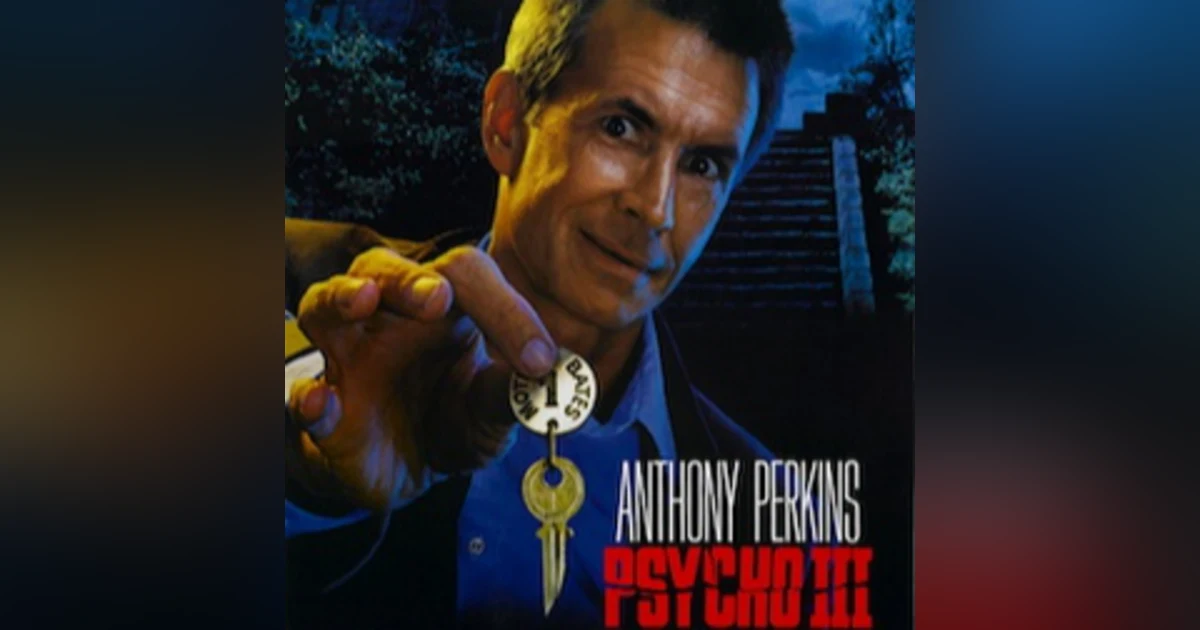
10:46 Like I love some of the more giallo ask like red, like deep Reds and pinks that you see here. I really enjoy like part of this movie. This was one for me. Like I saw Psycho 3 first as well, like similar to Canal. And it stood. I think it was probably like a time where you're going through like the cable TV Guide they used to send us back in the day, like here's everything on for the next week. And what stood out about it was the cover art. The close up of Anthony Perkins is Norman like dangling the keys to a motel room. And I'm like, I was familiar with Psycho. I think I said on the Psycho episode how in 3rd grade I did a diorama of the climax of Psycho where I had Mrs. Bates like sitting in the chair with like figurines, like coming in. And I definitely got a call home from school for that, asking if I was OK.
11:44 But I hadn't seen the movie at that point. It would be years before I'd saw it. But I did watch Psycho 3 and thought like, it was a lot of fun. A lot of it went right over my head, but it's like a kind of fun late slasher. It really worked. And to your point, Brian, I think that this is a very rewatchable movie. Like this is something that could see pulling pulling off the shelves and seeing where it lands. I think at some point we should do some drafts where we do, you know, what is the best part three? What is the best part for for like a draft? I think we can have a lot of fun with that, especially given the franchises we covered. I would like to mention really quick another key element of this movie that was kind of put into my head probably before. I'm sure it was before I saw the movie. When I was pretty young, my mom took me to this special effects thing that was up at the Pacific Science Center and they had fresh off the set, I'm sure, the corpse of Mrs. Spool in a rocking chair behind glass and it's. So cool.
12:54 And I still have a picture of it. And so it's just like one of those moments where young Brian was turned into a horror fan. You know, they also had a, a setup of of Ripley in the, the, you know, the loader, the yellow loader thing fighting them, Queen Alien. So yeah, there it was. It was, that was quite a moment for me. I think I had decided to become a special effects artist after visiting that and so it didn't happen. But you know, hey, kid can dream, right? We all have. Wait a minute. I just want to point out of all the things you could have pulled out as a prop like mid recording you with the picture of like Mrs. Spool would probably be near the top of the list. And it's like.
13:39 I don't know where it is. Reached over OK. It's put away somewhere in a box, but conveniently the guitars aren't in the. Room the pictures packed away like conveniently, all the things you could be pulling out as props right now are just not in the room you. Are Dwayne, I think is what we're saying here. Well, we're going to talk about the background, but very briefly and listeners a little behind the scenes, like I have no notes today, like usually write these detailed outlines specifically for the background and there's just not a lot to talk about in terms of the background for this. Without a net here people. Go without a net. So this could go either way, but essentially what it boiled down to is universal. Like one in a Psycho 3 after Psycho 2 was a hit. And if we remember from Part 2, that movie was supposed to go straight to cable.
14:33 They were going to replace Anthony Perkins with Christopher Walken. And then when Perkins signed on board, they look, we'll put it in theaters. We really won't give it that much more money, but we'll put it in theaters and it ends up on like for a $4 million budget, clearing more than almost $35 million. So of course, by this point we're in the 80s where sequels were much more of a thing. So you already by night between 83 and 87, there's like 3 Nightmare on Elm Street movies and that that franchise hit in 1984. There's three or four more Friday the 13th.
15:16 We're a year away from Michael Myers hitting the big screen again. But there's a follow up to Texas Chainsaw Massacre, another film that no one thought there would ever be a sequel to. So by this point, like sequels are a thing. And if if Psycho 2 is a hit, it tends to say that, all right, we're going to have a Psycho 3. And Perkins says, like, I'll definitely come back. If so, he has some conditions. And now like he has a bit more of he has a bit more of a hand that he can show because like you can't do, you can't recast Anthony Perkins in Psycho 3. Maybe you could have done it in Psycho 2. Maybe. But you definitely can after the second one's a hit. He's like, I will come back if you let me direct the movie. And Universal was like, you know what, fine, why not? Let's let you do it like it because they they know like they want to make this movie.
16:10 Well, that was something he had wanted to do for two, which we mentioned last week, and they were like, no. So I think now that the the sequel is a hit, he's got, like you said, a little more leverage. And also his relationship to Norman Bates softens after Psycho too, as well. He'd be, he's really kind of kind of hates the the comparison for very obvious reasons. I hates that it's kind of his defining role. And I think Psycho 2 kind of softens his feeling toward the role. And so I think he's a lot more willing to step in and and keep keep the Norman train rolling. Towards this time he says that, and I think Janet Lee came around to the same thing, that he would much rather be remembered for something in his career than like play a bunch of roles that nobody remembers later on.
16:57 Like he's actually, you know, this is his legacy. And I think you see that like if you if you get the Screen Factory Blu-ray for it, when you load it up, like the loading screen is Norman standing in front of the bait smoke towel like it's a long shot and it's him like waving at the camera. And I believe that was taken from like a Universal Studios tour because as he's filming Cycle 3, like there are tour buses going through for Universal Studios. And he would come out and just wave and give everybody a thrill. Like he would also get a little pissed off, like I'm trying to make a fucking movie here. What's going on. But every now and then he would kind of lean into the experience and like what a thrill that would have been to have like a young as a young kid to go through that tour and have Norman actually out there waving. Like that would have been the only other equivalent I can think of is like Bruce the shark from Jaws coming up during the Jaws scene and fighting the head off of a small child. Like who's going to be our Alex Kitner today? And then one kid dies and gets eaten by a shark. This is why they don't let me design studio tours or really anything.
18:11 One of many reasons. Yeah, one of many reasons. Other thing would be talent and lack thereof. Ability. Right ability, ambition. Knowledge. All those things knowledge, right? So many strikes against you there. Now I just feel bad. Nah, we love you, Mike. Well, someone has to do they though anyway. So Perkins signs on quickly is like, oh boy, maybe I bit off a little bit more than I can chew. He does approach Rick Richard Franklin at some point and says like, how do you feel about Co directing Psycho 3? And Richard Franklin says, yeah, I'm good. It's so easy. He's on now, from what I could gather. Like there is the documentary the Psycho Legacy. They talk about the first 4 movies and the surviving like cast and crew all speak very positively about Anthony Perkins.
19:02 Like his style on set, his ability to get into character very quickly and like switch back and forth between director Anthony and character Norman. And that the crew also like really dug him as well. So that everyone speaks very highly of him in terms of like a leader of men and leader of a cast and crew. But he did feel he, I think later on in life he does say this. It was a bit overwhelming to do both. He would have maybe preferred to direct something first where he didn't have to star in it. This unfortunately is also around the time he get, he is diagnosed as HIV positive, which must have been weighing on him. I think you kind of see a little bit of it in the film, like the four years in between two and three. He does look a bit older and worse for wear as well at 1.1 of the cat that gets Julietta Cummins makes a homophobic comment or joke on set and then he almost fires her for it. So but that's all going on.
20:04 I don't have a lot over, I would say like Roberta Maxwell, who's hired is Tracy the reporter as the Oh, and the the film is written by Charles Edward Pogue, who has just come off of like writing the Fly for David Crow. Cronenberg, that script was getting passed around and he was considered a hot commodity. Now, Pogue doesn't consider himself a horror person. He says his favorite horror movie is like The Island of Lost Souls, which is kind of more of a sci-fi horror. He's much more of a fantasy guy. Crawl the Conqueror. He wrote the Dragon Heart series, including the first one with Bale and McConaughey. That's all Charles Edward Pogue.
20:44 So he's like very upfront saying I'm not a huge horror guy, but why not? Like, I I need the work. Like he wasn't super established by then. He had written the role of Tracy as a younger woman. And Perkinson's knows she needs to be older. And the reasoning behind it is Tracy as a character will talk about like her motivations are like, I need to break a story. Or I could be on the outs. Like there's a bit more of desperation behind her. Also, newcomer Jeff Fey, probably best known for Lost, is Frank the pilot, who he's amazing in that show. And here's my question. Jeff Fahey strikes me as the kind of guy that could have had a Bill Paxton type of career. Like, come, come in, play really weird, but also be a leading man when you need it as well, right?
21:34 Well, I mean, he's got his moments. I love body parts. You ever see that? I have not. Wow, that movie's amazing. See here. So he's he. Yeah, I know. He's just kind of he's he's mostly just a character. Just. That's not what I meant. He's mostly a character actor, but I think he's really memorable in in his roles. I love him in this. I love him in body parts. Lawnmower Man. I think probably derailed some things for him. Sure. But you know that that's the way things go sometimes. But I always enjoy seeing him. He'll pop up in like Kevin Costner movies and stuff like that. And it's, it's he's, he's a good, he's good in the Western, you know, So I always dig him when I see him.
22:22 Yeah, I thought, I think he's like particularly great in this like, because The thing is like like like a special like The thing is like you say we are in sleazy chat, like like a sleazy slasher kind of time period. Now that's what's popping like. But The thing is like with like the other slashes, like, you know, they're just like these evil serial killers, but like flipping, you know, you know, you know, they're just these evil monsters. But like with Norman being like quite a quite a sympathetic character, there's a tragedy to him, you know, flipping, you know, he's he's not just like an embodiment of evil as such, like flipping kind of makes it, you know, it kind of makes it harder to enjoy a slasher kill when it's Norman, unless you have Jeff Fahey being the biggest asshole in the world. That's a good point.
23:22 Like flipping, you know, So when it when it's his time, you are like, yes, Norman, get it dealt with. Yeah, and they try to hint at Fahey's Dwayne being the killer, like similar to Psycho to is it actually Norman and Pogue said that as initially proposed, like Dwayne was going to be the killer, said it never actually made it to the written page, but like when he was outlining, it was going to be like Dwayne was going to be behind the murders initially. And you could see hints of like where you can see hints of that idea in here. But Dwayne is a much, much like you said, canal, very sleazy, almost like he's lifted like straight from like a De Palma movie.
24:07 You know, I know that like Dennis Franz, like they discovered him through De Palma. You almost gonna think like Fahey would have been the same. It almost feels like he's a reworking of that of the Dennis Franz character from 2:00. But you know, hey, I since that character is dead, you need to have I love that they brought someone like him in and I think I think that Fahey fits the bill pretty well. Much more attractive than Dennis France. Yeah, and another thing in my understanding from Charles Edward Pogue, the writer, is that he was pretty much given 1 mandate and that was fix the twist, you know, take it back and Missus, Missus Spool as Norman's mother doesn't make a lot of sense. Make it misses Bates again.
24:54 And so he does that, though he doesn't do it right away. It doesn't just erase it. It takes it goes through the process of making it happen, which I think is good rather than it just being forget it, let's fix it in the first minute and then move on. There's a real, there's a character involved working on it, you know, so that it is sort of like wrenching things back from the second movie. But, you know, he had a, he had a that's a big order. That's a tall order to try and pull off. And I think he does pretty well with it. Yeah. You know, some people may not like it, but I actually like that they switch it back to Norma. It just I don't know.
25:37 It makes more sense. Yeah. Yeah, I think I think it's really good like from in terms of what he's doing as a writer is that that we're on the third film of a series called Psycho and like the still I like a good mystery running through the third one. I mean, like the main characters, Norman Bates, the psycho and we've known we've known he he like a watch recall it kills people since quite early on in the watch recall it the first movie, but we've still managed to have like this sort of who done it and why aspects running through all the films.
26:18 That's hard to do when the film's called psycho character in it, who is the psycho and people are being killed. Because like normally when people are being killed, your first suspect is the serial killer. Usually is that usually stands to reason. And a lot of that is Perkins, like a lot of that is Perkins elicits so much sympathy from viewers as well, and he just knows how to play this character. And it's a slightly different it's a much different Norman in some ways from the first movie. It's a slightly different Norman from the second, but you can see like a straight through line from 60s Psycho to Norman to 19. It should be 1982.
27:05 So 19 is Norman. Why he is the way he is. Like, it doesn't ring false. Like this character is unrecognizable. And I get into that. We talk about the movie here. Unfortunately for Perkins, like the movie is not a hit. Psycho 2 comes out. It's the lowest grossing theatrically of the series. It on about like a four or $5 million budget pulls in less than $15 million total and I have some ideas as to why, but I'm interested to hear from you guys like why is this one such a come down from Part 2? I feel like what should we call it? Like we mentioned like a lot earlier on that like there's interesting things happening in in it and like like new themes coming in.
27:55 And. I think a lot of the audience at the time that I've wanted to see the next Psycho film or a new franchise horror, weren't ready for some of the deeper films. Some of the deeper aspects I mean. Like the film literally opens on a black screen and a blood curdling scream of a woman screaming there is no God before there's even a title card. That's. I love that that's that's heavy, heavy opening to a film. But people who were like, like, like they're making like Friday the 13th, but it's Psycho, like people come in and see that they're they're going to be like quite on the back foot from a very early stage. So I think like, like, people weren't ready for a third film and a franchise to be doing this much and bringing in, like, interesting new themes and discussions. Like, I think that might have been a bit much for people who just wanted to see like, people getting stabbed in the shower. Yeah, I think to some extent there's also this kind of follows a similar, this franchise follows kind of a you guys talked about Back to the Future 3 the other day, but it kind of follows a similar trend to sort of Arc I guess to that series.
29:14 You have sort of an original, iconic, untouchable, paradigm shifting kind of movie. And then the second one gets really, really complicated. Like almost to the point you could argue maybe even too complicated. And then the third one takes this, OK, let's make things more like the first one. And I think that there's a lot of callback in this 1 and in Back to the Future Part 3 to the first film, there's there's a sense that, OK, we're settling down into something that's familiar even while we're exploring these other themes and things that. And I think, but on the surface for your average film goer, they're seeing, there's a lot of stuff in here that's just like the first movie. And that is my opinion.
30:00 I don't know if that is the way that I mean, I, I know that was Anthony Perkins opinion that he felt it was a little too close to the first movie, but there, you know, so that could be an element as to why this movie didn't do as well. A word of mouth might have said, you know what, you've kind of seen this before. But I kind of reject the notion because I think there is a lot more going on thematically in a different direction from the original Psycho. But in terms of story, there's a lot of similarity, yeah. Fewer trains, though, than Back to the Future 3 fewer. Trains. Locomotives do not play a role on the climax, just to be clear. I've always been of the impression that a movie's box or a sequels box office is a direct response to the film that came out before it.
30:50 Yeah. So I think in a lot of ways Psycho 2 is it does very well because Psycho is a big hit and people like, what are they going to do with this after so many years away from the franchise? How are we going to where is Norman? Where do we find him? And then whether or not response to that one was super great or not, we we really enjoyed it when we talked about it last week. But you know, people in the 80s may not have. And so this made I mean it. Was my recollection. I'm looking at the box office right now. It opens at #8 behind 7 movies that have been out for at least at minimum two weeks. Like they're in their second weekend. So like it opens behind Karate Kid Part 2, Ruthless People, Back to School, Top Gun, Legal Eagles, Running Scared, and Ferris Bueller's Day Off, which itself has been out for four weeks. So I mean, it's, it's and Psycho 3 is the highest rated new release of the week at #8 And then behind that you've got another a bunch of other new releases like The Great Mouse Detective, Big Trouble in Little China and Princess Under the Cherry Moon.
31:57 What a time to go to the mice. Yeah. We used to be a proper country. Yeah, I mean, and to be fair, was a time when, you know, the the there wasn't a 45 day theatrical window and feeling like, wow, that's a long time. It was like movies would run for months, if not a year, if it was very successful. And it would be typically a solid like 9 months to a year before it would come out on on VHS or cable. And I think that might be part of it as well. And I know that when it came to Halloween 5, like the Akkads felt that a the quick turn around heard it. But I'll having Halloween 4 on VHS like right when Halloween 5 was coming out hurt the movie like a lot of folks are now like I'll just wait for it to come out and watch it at home like I'll rent it.
32:50 I think to your point, both of your points, like there is like a curiosity factor about Psycho 2 that you're like, like, I don't know if this is going to be good, but I have to see this. I have to see how they're going to follow this up. And once you have that, whether you're good, bad or indifferent. And I know like, Roger Ebert gave Psycho 2A thumbs down, but Psycho 3A thumbs up, like he enjoyed that one a lot more, which is odd because the things that Psycho 3 has more of are things that Ebert typically hated. There's a lot more, It's a lot more alert. It's a lot more violent. I guess Ebert Ebert does love boobs. So I think maybe I was.
33:31 Going to say that there's a lot to do with it there. Yeah, Because, I mean, there was no bigger fan of Russ Meyer than Roger Ebert. But I think also the fact that Psycho 2 is more riffing on the slashers of the day, which Ebert, generally speaking, did not enjoy, versus this, which is riffing on some other things and doing some different things cinematically that I think he's gonna be more drawn in by, like the Coen brothers homages and things like that. So I feel like there's a little more here to titillate than there was in Psycho 2, personally. Well, let's start there then, because that is like something that came up when looking at the background. It's like the movie that Perkins would show the cast when he was considering them. Like he's Fahey said he sat down and and like showed me blood simple from the Coen brothers, which is 1 I have not seen yet. Like that's I've got a lot of Coen brother blind spots myself. And you know, Steven, you're giving me the the a dirty look right now.
34:29 What? That's one to fill. That's one that you like. Yeah, it is. I think I own it too. I think I actually own it and just need to like, sit down and watch it. What about Blood simple would have like called to Perkins and where do you see like the influence here? Like, I mean, certainly the soundtrack, it's a Carter Burwell or bow. Yeah, exactly. That's the biggest one. Blood Simple's like it's, it's, it's really sweaty, tactile film. Like there's a lot to the aesthetics that you can that you can taste like and, and like so much that film. It's the kind of film where like, like, like and like flipping like huge sections of Blood Simple are just two people with 10 with, with some kind of issue between them, some kind of tension. And like it's a kind of slow burn where you're as on your edge of the seat as you would be if there's like visible peril. Unlike I, I think what you call it a lot of like that way of building suspense, what you call it happens a lot in in this as opposed to like the more sort of Hitchcockian bomb under the table suspense, like flipping.
35:49 Like a notable moment, I think particularly is the ice, The ice, that moment like flipping. Where there's yeah, there's dark humour going on underneath the surface of it as well. Yeah, for me, it's it's there's some very clear visual cues that absolutely that Perkins latched onto, including what you're talking about the lighting. There's a lot of that sort of purple, pinkish and then the greens that are just flooding the screen. That's very much the look of Blood Simple. It's got sort of shallow esque like you mentioned. Also the transitions, the cones are great with transitions and they do that starting in Blood Simple. They carry it on.
36:32 You see it in Fargo too. There's there's one where they focus on the TV that's in the diner and then it pulls over and nor and that we're in Normans parlor now and in his room and he's watching the same show, you know, and that that's transitioning like that. There's also one where where they show the light under the door of the. Yeah, just the light shining into the door. Then it goes to the edge of the knife. Those kinds of transitions are right out of Cohen's playbook, especially in those early ones. Particularly I would say Blood Simple Fargo does a lot of, you know, this idea of someone's looking up at a fan and then you cut to the fan and then you cut to another person looking at the fan and it's and it's in a different spot. And the part where he walks where Norman walks down the hall out of the hospital room, right in the mother's room. That's another kind of thing like that. So there are a lot of things like that that strike me as right out of of blood Simple playbook. And also even just the, the setting, they make it look blood simple as sagebrush and rolling tumbleweeds in Texas. And here he does that in the opening shot of the motel. Right.
37:43 You have all the dust flying and the sage brush and the tumble weeds right there. Yeah. There's a lot of that sort of feel. And then when she's just walking through the desert, I mean, away from the nunnery, I mean, obviously the shot of the nunnery is like right out of Vertigo. And then you. Yes. I was also getting a lot of omens from that shot as well. It's all, it's all for you, Damien kind of shit when she's when she's like out on the ledge there. But yeah, yeah. And I mean, the rain motif is one that the Cohens I think used in Blood Simple as well. And it feels like there's so much. Rain. Yeah, right. Yeah. Just so much rain in this movie, more than we've gotten in any Psycho movie which is separate, diverse, where the. I was going to say absolutely right for the next day, you know, right, But right, I love that it's like this torrential downpour than the next morning.
38:36 Everything. Everything is completely dry. Well, that's the desert, Brian. The sun comes out in the desert and it dries everything. Out I guess I don't know how weather works. Haven't you ever heard the Itsy Bitsy Spider, Brian? I mean, as a music teacher, have you not? Heard the spider, yeah. So all the things you mentioned, Brian, are all things like mentally I made a note of like especially the lighting under the door to the Knife's Edge in particular, and the transition from the bar television to the bedroom television. I'm like, that is wonderful. So it's funny that you're like, Oh yeah, that was right from the Coen Brothers. I'm like, I thought Perkins maybe had the juice, but. Well, you know, The thing is it's he was he like, you know, a lot of film makers of his of that time year to Palmas and others. He's he saw a filmmaker that he really likes and he's sort of doing a similar thing to what they do, but you know, in his through his own sensibility as well. Yeah, right.
39:31 I think it's not like they're similar, but they're not like the same. I think some of them I'm like, I didn't even, I'm like, I can't even figure out how we did that. Sure, in some cases. So it's pretty cool. I think like what we call it like there's, there's definitely like elements of environmental storytelling to it. Like, like I mentioned, like the coloured light bulbs earlier, like, like the thing that like thing that I, I was sort of like really looking at today was Jeff Fahey's room. Because if, if, if you were to just give a quick glance at you think, Oh yeah, he's just like he's got beer everywhere. He's just trashed his hotel room. Like if yeah, if you really look at it, you realise it tells you a lot about Jeff, a character, because he's put a lot of effort into making it look like that with all the cut out pictures of women in that and like putting things on lamps to create like shadow effects. You know, that's not something that's been that that's that's a diegetic really like like he's like actually like sat in his root, like, like designing crazy lighting in his room that he what we call is trying to bring women back to like. So so there's something about like the whole element of controlling this environment that appears chaotic. Like, you know, there's a you know, it's sort of like says there's something going on under the hood. You know, he's not just Dennis friends. Like, I just want a bit of money. Yeah, test.
40:59 Yeah, you know. Well, the those deep Reds follow Fahey's character Dwayne. Like when you first see him enter the bar and he's going to approach Mary and kind of work his charming her. Like the way that whole part of the bar is lit is that like deep red lighting? And he's in that background and you just get that sense. Like he's a character that emanates danger from that kind of lighting, a much different sort of danger than Norman is. When you watch, there's almost something vampiric about the character because when you see him during the daytime hours, he comes off as like much more aloof, a lot softer.
41:40 He actually apologizes to he apologizes to Mary in the bar. I said when he purchased Mary most is Tracy in the bar. He apologized to her. Sorry about the night before. I don't know what's going on. Look, I'm just if you want a roomie and get a room and at night time he gets a lot more feral and a lot meaner and like that side of him comes out. It's almost like there's a transition there. I really love that about how the character is portrayed. You can tell in the way that Perkins kind of films Fahey that there's probably some measure of attraction there for Perkins. I mean that it feels like the camera really loves Fahey.
42:23 Look at him in this. He's gorgeous. My, my point exactly. I think Perkins I, I saw an interview with Oz Perkins after I watched this movie and Oz is saying, you know, my, my dad had a real problem with being authentic with me. And then I sit down and I watch Psycho 3 and I see Jeff Fahey and all of a sudden IA lot of things started to make sense to me and my father seemed much more authentic in the way that he shot Fahey than he did just with me in everyday life. So I mean, you can definitely tell, particularly in the later scenes. You know, we Fahey also in this gives us a new position for the orgy guy with the with the lighting guy sitting in the corner with the lighting, with the gels over the lamps, kind of strategically holding one over his crotch the whole time.
43:12 Yeah. And when he's shirtless and those final scenes, you get that kind of like, yeah, I think Perkins is definitely attracted to this guy. Yeah, that that that scene with the with the purple light in like like a lot of people like just look at it through the AT slasher lens to dismiss it as like a random tit scene. That's the scene for the bisexuals. Yes, very much so. Like flipping like Fahey with his, what we call it, with the chest air out holding 2 separate lamps that he's put purple bulbs in that he's brought with him in in his room. Like sort of doing the whole sort of like lighting dance with the woman in their life and the fact that it's purple. You know, we're in the early days of Joel Schumacher lighting and all.
43:58 Like, like, like, yeah, you know, the, the there was some, but there was some very queer bisexual coding to that scene. Absolutely. Absolutely. And like, I think that's quite interesting because that feels like, like the studio said, yeah, we need it. We definitely need a tit scene in this. I know I watched the corn let's they had to have like something kind of sleazy going on because they've got this kind of purity with the character that we're going to see in in the shower. So. Right. I think there's also a well, like Fahey was supposed to apparently be nude for that scene and they he like wasn't comfortable with it. So that's why we have like the strategic lamp placement there. But no, I definitely agree.
44:45 And also like I get a lot of like his room kind of gives me Miami Vice vibes. I don't know if that kind of hits for anyone else, just in terms of, I think again, the luridness, the lighting, it being kind of the mid to late 80s where. One of the things that occurred to me was in After Hours, there's a scene where he's riding in the cab and they're all these cut outs of women on the pasted onto the cab. And there's sort of a similar sort of for the night sequences at least sort of a similar look to After Hours in this as well where there's a green lighting and stuff. Yeah, like going back to what you said about flipping him being vampiric, it does feel like his rooms like a layer, isn't it?
45:32 Like, And that's what he's at his most powerful when he's in this environment that he can control because like normally he's this guy living out his car and he's just sort of trying to get by and trying to find a job rather than for when he's got this space that he can control and he can control what happens in it. You know, what should we call it? That's when, like the real darkness in him can come out. You see in that scene too, like when Norman confronts Dwayne at the end, some of the hoses that they have Fahey and they're almost like Brundle fly. Like the thing that came up right away. I'm like, that looks like Goldblum and the fly right there. And he's also like he's shirtless and sweaty. There's just something much more feral about him. I'm glad they didn't go the route. Like when it's revealed he's the person that moved Mother out to save like Norman skin.
46:30 I'm glad that the twist is more I just want money because I'm broke, not I'm like your long lost cousin or cuz there's like a a line that's dropped in the movie at one point like oh, Missus Spool said she had a son at some point but no one ever saw him. And I'm like, don't say this is going to be another son. Your little brother or your little cousin? Yeah. So I thought. That's where we were going at one point, and I'm glad we didn't go there. Yeah. Brian, to your point about like the way the motel is first shot, like when you see the tumbleweeds and the sense of isolation, I think like that's one of the thing this film does really well is that it does feel like the characters that are drawn to it, like Norman is the caretaker, Maureen, Diana Scarwit is Maureen Fahey's Dwayne. There are all these characters that are drawn to this place, and it's almost like you can never escape it. It's just it's an isolated setting, completely apart from the rest of the world.
47:36 And it's going to draw in these severely damaged characters that only the Bates Motel can really house them. And I love that about kind of the way this film sets up that idea. Yeah, you could even see that as a motif with Mary and Crane in the first film as she you can check out any time you'd like, but you could never leave to quote another California reference there. Please never. Quote the Eagles on her. I hate the fucking Eagles, man. I hate the Eagles. That's that's yeah. Speaking of the Coen brothers, every time an Eagles song comes on, I have to quote the dude.
48:19 But anyway. It's the only correct opinion about the Eagles. Fuck the Eagles. This is just a side thing. Every time there's a news story about the eagles consequence on posts, a picture of the dude sitting at the bar looking annoyed. It's a. It's a anyway just. Like like I think that's a bit, it's come back that we didn't see so much in the in the second one because like this idea about, about this like the motel being like this place for like broken people, like like kind of like a limbo for people with nowhere else to go. Like, you know, it's kind of like the taxidermy sort of like, I think there was like it was kind of touched on in the first one, not so much in the second one. And the taxidermy kind of like comes back a bit in the third one.
49:18 This whole idea of like the maintenance, the upkeep, the taking care of something that can never go anywhere, like, yeah. In a sense, it's almost like a purgatory. Yep, right. It's a, it's a place of limbo. You know, it's not quite hell, but. Yeah. Well, it's, you know, it's a lateral move. It's where it's where the it's where the penance occurs, you know? Anyway, that's, that's something for my show. Holland for the second one, like Holland and Franklin both said like they made a deliberate choice to move the action away from the hotel and center it much more on the House. And it's not stated, but it does feel like there's a much more deliberate attempt to like center the the motel a bit more in this one in terms of how we how we see it. You mentioned the taxidermy canal, like some of the things I really like in terms of like how Norman is reintroduced. As you see how he slipped, you see how he is slipped because a, he's deliberately poisoning the birds in order to get more specimens.
50:28 And then as he's stuffing them, he uses the same spoon that he's filling these birds crevices with, with sawdust to take a nice scoop of GIF and spread it on some peanut butter crackers. Again, Peter Pan. Peter Pan. Oh, it's Peter Pan. My bad. Peter Pan, which is even more sort of, you know, underlies the theme. I think that's a great. Point. So I was just going to say like he's eating peanut butter crackers, like he's eating children, like he's eating children's food. Again like that is like Norman, this is perpetual 12 year old. Yeah, a lot like you've got to be on your PS and QS with like health and safety when you're doing taxidermy.
51:10 Like don't if you've heard of him, chap called Jack Devaney very good follow on Instagram and all that. Like flipping spoke to him a few times like a Comedy Festival I was doing. He's a guy who does he describes what he does as bad taxidermy. He does like he does like makes pencil cases out of like dead rats and that there's a lot of pencils sharpener in the asshole so you can stick the pencil up the bottom. Wow, Yeah, yeah, Jack Devaney, like on Instagram, he's whirled around you but you like a sheep EWE but and yeah, he he makes surreal things with like what we've got. He doesn't kill animals, but he he, he obtains what we call it the corpses of animals to make things with and like like through likes following him.
52:07 I know that like you, you, you are, you really have got to be on your PS and QS in terms of health and safety if you're dealing with animal material. Right. Like just carry disease. I mean they just that's the thing. If they just carry all these germs and disease. And poison if you poison them yourself. Right, which he's clearly done. Yeah, I love that. You clearly, like in the second film, Norman was trying to hang on to his sanity by the Thinnest Threads. And when you start this movie, like he's clearly it's clearly hasn't gone well. Like he's clearly gone back to being mentally unwell.
52:51 But what I like about this is he like, he seems to realize it and is doing more of a job trying to cover his tracks in this movie, not just with like the murders, which he believes are being committed by mother, but just himself in general trying to. He knows he's not right, so therefore he's going to keep everybody away as much as he can. I said like the tax, the taxidermy of something that, that you've killed. There's this, there's this part of them which which compels him to like take lives, but that, you know, but like there's this other part of him that what we call it like hates himself for doing it and wants to and wants to repair the damage he's done. So he, he, he's got this like permanent torment. So there's like this, this constant like, you know, even though he might not be aware of some of the things he's doing, like, like, like, I think on some level he does because he, he's carrying the guilt of it.
53:52 Like, and like, that's where we sort of come back to like the sort of religious themes which we haven't really talked about yet because like, like, like lapse Catholic guilt is like top five guilts. It's like one of the best guilts ever. They're they're flipping lapse Catholics. They are about the guilt life. They love a bit of guilt and like, unlike what should it like? So if you're having like, we haven't even mentioned the opening sequence, the opening sequence of a lapsed Catholic nun accidentally being responsible for the death of an innocent person and then having to live with that, that's that's like that's like about 3 of the top five guilts. And it zips through that opening. See, like canal you pointed out, like the way it opens with her just screaming there is no God.
54:48 Like that is what is injured. You're settled into your seat, you've got your popcorn, you're ready for Psycho 3. And some woman is screaming there is no God into a blank, a black void. And you're like, what did I just walk into here? Right? Decide the idea of not just guilt but repression like repressing desire, repressing your identity like hiding getting it from the world out of the sense of guilt like permeates this and this I you know you mentioned like briefly touched on Vertigo. You see like Maureen like her initials are MC and in some ways like Norman is trying to recreate Marian Crane like whether he sees her dress.
55:30 He's like I think you would look great in that like his conservative look will never go out of style. He's trying to recreate Marian in some ways in order to maybe save this person rather than kill this person as an act of penance and maybe forgiveness for what he had done 22 years ago. Yeah, I got to say, keeping with the religious themes, I love the twist on the shower scene where they get there, where, you know, Norman gets there and she's already slashed her wrist and she thinks she sees the Virgin Mary is like, that's pretty subversive stuff there. But then my gosh, that priest psychologist is terrible.
56:13 Just like, you know, your, your suicide's a sin. No, no, no, no, no. You know, it's like, come on, man, a little bit of compassion would be nice to. Meet this woman where she is and recognize and validate the fact that she's feeling the way she's feeling for a reason. Yeah, this, this line of this line of inquiry is probably what put her there in the first place. There's a there's sort of this line, this dichotomy drawn between the institutional church and people who actually are compassionate. I, I think that is something that comes up a lot in, you know, a lot of movies like this, you know, where the, where there's a religious theme is the difference between the two, where there's the purse, the people who actually live out what the church supposedly believes, and then the institutional element that is filled with hypocrisy and condemnation.
57:10 I mean, that's in all kinds of things, you know, from this to, you know, the Shawshank Redemption to all kinds of things. So, but I, I do, these are the kinds of things that I frankly, it's part of the reason why I started the Holy Terrors podcast is because I like, you know, delving into this kind of stuff. And I think it's really fascinating to discuss those, those kinds of tensions as they're explored in horror. So, and this is a good example of that, But I mean, it doesn't, I don't know that this movie clobbers you over the head with it the way that my mom do because it because it it it also knows it's a sleazy slasher movie on some level too. And I feel like maybe I'm wrong, but my recollection is telling me that they were sort of mandated to gore it up a little bit.
58:03 That is true. That is like something that and, and PO like Pogue talks about it in like the commentary where he says like the scenes that he and Perkins were least comfortable with were some of the kill scenes, like how gory they are, which is odd because honestly, I think they're very well executed. Like those scenes are really well done. And we'll talk about those shortly. But he said in particular, like before he wrote the script, he was sitting down with the head of Universal Studios, Frank Price. And he was like, well, we should probably do something where a person's like never been like really killed there before.
58:44 And Price like was the person who suggested, well, what about a toilet? Like, what about when they're going to the bathroom and Pogue immediately ran with it? He's like, that's kind of a great idea because you're so vulnerable. Like, your pants are around your ankles, so even if you're naked, you can still run. But if you try to get off the toilet and your pants are around your ankles, you're going to face plant right away. I mean, who among us hasn't done that before, right? Apparently he hadn't seen Friday the 13th 5 yet though, right? Damn. Enchiladas. Well also I I love how the bathroom. Becomes, though that's different from the. Toilet it is different than a toilet we'll.
59:26 Distinguish between them. With with this movie and it's this this particular bathroom scene, this becomes now a recurring motif in these films. There is a bathroom scene in every cycle movie up to this point. It it becomes a recurring motif and I, I kind of dig it for that. In that you. Yeah, we're continuing to play, find new ways to play with this idea of killing in the bathroom. Yeah. There are other ways that we can do it here. Let's show you some of them. Throw it slashed on the toilet. Why not? Yeah, I mean, like, it is such a good subversion that Norman Bates dresses mother, goes into, goes into a bathroom. And save someone like that, that's, that's amazing. And it's someone who like, like you mentioned the terrible pre psychologist that should have been who, who, who was like helping her when she needed it.
1:00:24 And the person who does help her is the person who's coming to kill her and like, and, and, and it has like such a profound impact because like later on when they're like sort of going on the date, like Norman's having a conversation with his mother about going on the date. And like, it's the first time she's not answering back and saying, like, stay away from those women. They're whores. Like. And, you know, it's, you almost feel that the, the, the part of Norman's brain that's like the voice of his mother, like actually kind of approves and like, like, like you do get that feeling that like what we call it, like there's genuinely, you know, a way to salvation from.
1:01:18 Yeah, if not approves, at least it's like fading or receding into the background a little bit that he is. You know, when we talk about the first film, like there's the psychiatry scene at the end where he says Norman is never fully Norman. Like Norma is always there. And you can feel that maybe for the first time, like Norma is starting to recede a little bit. And, you know, like, Brian, you mentioned like institutional religion versus empathy on an individual level, which you see here, like with Norma and with Maureen. I'm sorry Norman and Maureen, you see 2 characters that can that are deeply flawed, very tragic and very hurt. People that can save one another, or at the very least like bring out the better parts of one another. Yes, exactly.
1:02:13 And I, I think that's one of the things that, you know, I really love about this movie. I mean, like they sort of the way they sort of awkwardly fall into bed together in that one sequence and neither of them really know what they're doing. And it's it's it's. It's like two teenagers or preteens like fumbling around and it makes. Sense for the characters and it's just so wonderfully done and again it just brings me back to wishing that Perkins had had more opportunities to make a movie where he could explore some of those kinds of things because I think he would have been able to do that in some really profound ways beyond, you know outside of the psycho. It's not a prison because he's able to explore quite a lot of interesting things in this movie. But but it's a limitation, I think, you know, because you have to bring it back to the mystery and back to the to the central conceit that, you know, Norman is a killer and who thinks he's his mother, you know, from time to time. But yeah, there there's there's some real tenderness in that relationship between Marine and and Norman that I think is some of the best acting that Perkins gives in this movie. You could.
1:03:29 I've always felt the performance of Norman in this movie is just a little bit stilted compared to the other two because he's got so much on his mind as a director. It's not a bad performance, but I think it's not as it doesn't feel as comfortable as as fully, I guess embodied as the as the first two. Sure. But. Definitely agree. But there are moments where it's like it. It might be his best performance as Norman in in certain moments. And I think that scene, the sequences where he and Maureen are together and it's sort of into this new territory where Norman has never been or that we've seen or we haven't at least we haven't seen Norman in this place is some of the most interesting stuff he ever did as Norman.
1:04:21 So those are some of the things that really stand out to me. I also like his performance, like when he plays up against, I think it's Hugh Dillon as like the sheriff. And his scenes with Maxwell is Tracy because you see like the kind of scared rabbit side of him, like when he confronts Tracy on the stairwell to his home, like when he sees her going up. And like there are, you know, at that point, obviously a call back to like Vera Miles is Lila in Part 1, like breaking into the breaking into the Bates home and like discovering his secret. Like, you can see his panic that's going to happen again. And when the sheriff and the deputy like, come into his home with a warrant, like that sense of like panic, but also being like indignant as well that like, oh, there's been a murder. So you immediately focus on me like I've done nothing, which we know that he has, but he's scared in that moment as well, but also offended, if that makes sense. Like the sort of like what else do I have to do to prove to you that I'm OK even though he's clearly not? Like so more would be the answer, but. I also think it's very interesting just, again, given Perkins's own struggles with his queer identity, that repression is such a huge part of this film. Absolutely.
1:05:44 And, and looking, you know, into his relationship with his own homosexuality, bisexuality, and the people that were in his life that were trying to convince him that that was something that he could overcome and do away with. This notion that someone turns to the church because of these carnal desires that they have, like Maureen does, I think is a very interesting through line for this film. And that I think culminates very interestingly in the same you guys were referencing earlier when they kind of awkwardly are fumbling with each other. And he eventually kind of just freezes up and says, I, I can't do this. And and kind of leaves like there's this again, this, this idea of I'm, I'm repressing these urges and desires that I have within myself as as a way of for for Norman, pleasing this mother for Marine, it would be pleasing God or the institution of the church, these things that keep us from living as our authentic selves, which I find is a very, again, meta textual, fascinating meta textual element to this film. That is.
1:06:45 Yeah, I don't know, Just I think for me it's probably one of the more interesting elements of this movie as a whole. I mean, the Catholic Church in particular was the refuge for, like, a lot of, like, closeted gay men to become priests. You know, like we've seen this was not a thing that was like widely known at the time, but we've seen in the past 20 years, like how many children were abused by priests at the time as. Mark Ruffalo said they knew. Yeah, they knew. So, you know, they, the church knew. But I'm not saying Anthony Perkins did at the time. But I think it's. Kind of interesting to be kind of ahead of the curb. And you know, that's because like so many of those men were told like you can't live as your authentic self.
1:07:30 And they figured, well, this is a way that I can like suppress or maybe even like kill off that part of myself. And is, as we know, like a much different degree. I talk about this in my own career with people that are anxious or angry. You need, you can't do that. Like there's only so much air you can put in a balloon before it pops. Like there's only so many times you can stuff down those urges or desires without letting them out that eventually they're going to come out. And they're going to come out in ways that are much more damaging and much more harmful than if you're just allowed to be yourself, which everybody deserves the right to be their authentic self with the caveat, as long as you're not hurting other people. And that's where Norman misses the mark, I think, as a character, as he can't do that without hurting people. Right, so let's talk about those kills. Let's talk about the people he hurts here, because I you know, we talked in the second movie.
1:08:29 They they mentioned how well we had to like ramp up the violence to get with the times and it looks ridiculous. I love Psycho too, but the dummy of Vera Miles getting stabbed through the mouth is that's. Amazing. The effects are not. That great, the effects here are fantastic and that that phone booth kill. The phone booth kill is like, awesome. Yeah, it's like, awesome. And frankly, it's a it's very much like the shower scene, and it's a lot of quick cuts and it's you don't see that much. You think you see more than you see. There's more blood than in the shower scene, but otherwise a. Lot more nipple too.
1:09:12 Yeah. Correct, That's true. That's true. But he's he's definitely drawing on, you know, Hitchcock for, for the, for the phone booth kill. Agree. And it just you get the IT feels almost like the Palma esque though where it's a lot more lured. The violence is ramped up. There's the nudity, like the absolutely unnecessary nudity right beforehand where she like comes out of her shirt twice like once in the door frame getting dressed and then another time like Oh my shirts on inside out. Although what I like about that moment is how it like incapacitates her and doesn't give her the ability to really kind of struggle or resist back because she's like tied up in the arms of the armholes basically.
1:09:59 And then the blood, you don't get the blood going down the shower drain to your point, Brian, but the blood dripping off like the phone receiver. The phone, it's a really great touch. The blood too looks like something out of a Verhoeven movie too. It's like thick and very viscerally red. It doesn't look a thing like real blood. It's very stylized, which I thought again, I dig a stylized blood drip for sure. Yeah, Philippine, what you call that? I definitely think you're right with the Palmer. And like we mentioned it a few times with like Jalo, like, like there's, there's real style to it. And I feel like, you know, there's that sort of like evolving through line of what Hitchcock did to what got picked up on by the Jello sort of movement to how that was sort of brought into the 70s and 80s American aesthetic by De Palma. I think there's a big through line there that that like you can see all of that coming through. Yeah, if you watch like early Bava especially, you know, Black Sunday, Black Sabbath and mention those because I I did commentaries on them.
1:11:05 So I I really keyed into this. You can really see. Yeah, I know you can really see the Hitchcock influence on those though. If you if especially I think I think Black Sabbath, there's a one of the sequences in there is like, wow, you know, it's there's so much of Vertigo. There's so much of psycho in this little one room drama that carries out in this in this thing. So and then Baba carrying that into like, you know, they have blood and stuff. You can you can see how that you know that and the creation of Jala. Those movies are they're they're the beginning, you know, blood and black lace, but they are a carrying on of what Hitchcock did with the then highly saturating the color and the look that Bava brought to it and then carried on by Argento and others. And you can see all of that sort of intermingling back in on itself through the lens of the Coen brothers, I guess into Anthony Perkins and Psycho 3.
1:12:14 And I really dig that about this. Great. I one thing you see here is like the hotel is, I don't want to say it's thriving, but it's much busier than like the second movie. It's not even open. Like they're going to reopen the hotel. But there's the idea that like this place is, and we talked about it feeling isolated, but you are getting customers here. And there's a part of me that wonders, like, would people go to the Bates Motel specifically because of the history of the motel, especially like at the time this was shot, which is in the 80s. And there's this, I could have gone in this direction either here or in the future where the Bates Motel becomes a sort of perverse tourist destination because of the history.
1:13:06 There were these murders in the 60s. And is that Psycho house? Psycho House, and this is my understanding of that. That's what this book is about. This is the third Robert Block a Psycho book. Now, did you buy that specifically because you thought I might make this point and you could whip it out? No, I've, I've had this book for, you know, 2025. You whipped it out last week too, Mike. If. You're yeah, I did, I did. I did. So this I've, I've, I've had this book for, you know, 30 years, but it. Remains unread. I I might have read it, I don't remember for sure. That's fine, doesn't look too cracked there, Brian is. All I'm saying, well, I mean, Oh yeah, you're probably right. Well. I think poke. Is the reader Sorry, I don't read as much as I would. Like, no judgement, Brian, no judgement at all, you read. That's the important thing.
1:13:53 Pogue said in the in the lead up to Psycho 3's release, he and Perkins were asked like, do you want to come back and write and direct another one? They universal thought like they were going to have a hit and Hulk Hogan Perkins talked about a take where like Norman breaks out of the asylum with a patient that's mute. The asylum burns down and he gets up, going back to the motel and it's been bought by a guy that is kind of running it as like a sideshow for this type of thing. And he hires Norman to basically play himself as like the Norman Bates of the to manage it and like there's idea there. So I was thinking that idea, and then Pogue mentioned that I'm like, yeah, that could be a lot of fun, this idea that we see a little in Part 2, like teens are breaking into the motel to have sex.
1:14:46 And you're exactly. Yeah. I think it's from from just a, you know, a story standpoint, though. There's also the fact that we haven't seen that in the other movies. We haven't seen the hotel with guests. It's kind of like in bringing Friday the 13th back a lot. It's kind of seeing kids at the camp in Part 6, you know, we haven't seen that before. So let's do something like that. And I like that they're doing that because I mean, obviously sometimes, I mean, in order for this place to stay in business, somebody's got to be in there sometimes, right? So that, you know, don't die and and don't pay, right? You know Marian Crane didn't pay for her stay because she didn't make it to check out time, but right A.
1:15:32 Big pile of money. Yeah, he didn't know about it. That's one of my favorite Mac guffins saying the Hitchcock. Movie I thought you paid up front I. Don't I don't think he. Yeah, I don't. I don't. Yeah, I don't remember her. Crane wasn't using her credit card. Yeah, I don't remember her being charged OK before. Beforehand I have a, but then then I have. A letterbox list and I have a letterbox list that like people that take taxis and don't pay and Psycho 3 is on that list because at one point Norman gets out of a taxi and doesn't pay so. There is one bit where he's called out for nearly walking out of the diner without paying now. Right.
1:16:17 Well, and that's, you know, Lee Garlington returning from to play Myrna from from Psycho too. She was also in the Seinfeld pilot as well as as a waitress. So Lee Garlington, one of the all time great waitresses. Yeah, calls him out for that. I just, I just didn't get a chance to call out Lee Garlington last week, so I wanted to rectify that today. I guess like you don't need money if you never pay for anything I guess, right? But apparently Norman has a lot of it because, you know, thriving business and all. Yeah. Like maybe he's. Played the market like all that time in the asylum he's like maybe I'll invest in this thing called IBM. What is that all about personal computers.
1:16:58 That's the way and he comes out a millionaire could be there you go just a a cut plot thread from psycho to that we never I like this. Theory. I want to talk about the end of this movie. I want to talk about the last act because I do think it with with a caveat like 1 reshot part of it that I don't like. I do love this idea of like Norman finally being free and you have the see after he accidentally kills after he actually accidentally kills Mary Maureen when she comes to him. This idea that like these two can never be together, they're they're beyond redemption. And it's the voice of mother that once again cuts in. You get the Great Arbor Gas moment of the Great with the fall down the stairs, and you get Chekhov's Arrow with the Cupid arrow.
1:17:46 We finally see someone die on that Cupid statue. But it's. Waiting for 20 damn years. But the idea that like, Nope, this is this kind of love will actually kill you like it is an actual doomed love. There's a little bit of symbolism there as well, but when you see other blackly humorous fits, like when Norman dressed, his mother is going up the stairs after Tracy. As he's going up the stairs, he like straightens the photograph out. That's crooked. That was a really nice. Love that love that and for the first time seeing mother's voice come out of Anthony Perkins mouth is so I love that moment. I think that is just really great stuff. It's.
1:18:28 Disturbing. It's probably the most disturbing moment in the whole film because they're, I mean, it's not him doing the voice. There's obviously other voice actors doing it, but it's way it's queued up. It's like just it's freaky. It's great, but ultimately, like Norman, not only like killing mother, but as he's doing, he's like stripping off the layers her of her as he's doing it and saying like he's he's Riddick. You don't think I have the guts and he like it's the only time you really see the knife go like super deep into a body as well here when he's like finally riding her. I kind of felt Tracy should have been murdered as well, but that's neither here nor there.
1:19:10 I guess because she has a pretty large hand and driving Norman over the precipice as well throughout this movie. It's one thing that what we call it like, like, like I say, I watched this film a lot. I saw it when I was quite young. It was only like when I watched it a few years ago when I realized, hang on, the body is desecrating. At the end. We know that's not his mother. He's just desecrating a body. After all these years of taxidermy, he's just desecrated a body that is not his mother. But but it's all symbolic. I mean, again, I said this last episode, more movies should end with old women getting hit over the head with the shovel, and this is not quite the same thing. But you know, it'll suffice in a pinch. Lateral move.
1:19:55 Lateral move. On my old podcast as we little sort of break between the ads. I had that what should we call it that the shovel shot from Psycho 2. But I like edited the Netflix to doom noise over. It oh love for that. My podcast isn't probably going to restart, so if anyone wants to nick it, it's there. It's a good idea. But I was going to say we should get that in as part of our soundboard. I think this this idea that like as he's getting let out by the sheriff, like why did you do it? Like you're going to be locked up for the rest of your life in in Norman saying, but I'll be free. And I think that's such a wonderful sentiment. It's a beautiful sentiment that less than 30 seconds later they completely undercut and.
1:20:43 Really undermine it. Yeah, yeah, that's. But that's that's what horror movies in the 80s do. I mean, it's just like every like movie that I can think of that is a great. You think of Nightmare and Elm Street, Nancy overcame this and then never mind. And then, you know, Jason's alive and you know, Michael is gone. At every movie undercuts its point in the 80s. I feel it's just the way it was. Yeah, because we need to keep making more of these. Again, they thought they had a hit on their hands. So we've got to bring Norman back. We've got to have him, you know, do more killings and more murders. So yeah, we've got to completely undercut that. And then again, of course, continue to call back to the first movie with that, you know, the the ending with the creepy smile, which we're going to, you know, do some funky lighting things with and make it look really cool. And I think you can do that without having her, having him take out her hand and stroke it like I think you could do. You could end the movie on that.
1:21:45 It would work very, very well. It would give you that touch of ambiguity, that feeling of like, OK, even if he's rid of Norma, is he really free? Is he free of himself? And it believe the original ending to the film was like when the wagon drives off the camera then pans back up through the window of the Bates home, and it's just like the chair empty, rocking in the breeze a little bit. And that's where it answered. I think it's like a really powerful ending. And it kind of. Makes much better ending the. Same suggestion at the end that Norm is not truly truly gone. Without being so flippingly obvious and also raising the question, did anybody frisk Norman when they read him his rights?
1:22:32 Like there is some sloppy police work that's going on there. Oh, really? Fairvale Fairvale work really sloppy. Fairvale Police Force is not known for their thoroughness. Correct? If there's anything that we've learned from these 3 movies, it's that. I mean, like, what do you call that? At one point the sheriff's got the blood of the victim in his mouth and he doesn't notice. Right. I love that moment too, and I know Canelo touched on. Just another scene. I think that. Humor. Yeah. For me, that was the scene that, you know, sort of clinched it for me when I first saw this was that was the ice. I, I think that is one of it's so funny and it's so dark and it's, it's ghoulish in a, in the best possible way. I think that is it was.
1:23:22 It's like a stroke of brilliance between the screenwriter and the director for that. And it it also, it's like at that moment, like the first movie where when Crane's car stops sinking into the bog and then it starts again and you kind of like do a little internal cheer, like, oh, thank God he's going to get away with it. It's the same thing here. And it makes you as an audience member confront the fact that like you're kind of Norman's side in all of these movies. And it's not something like the Elm Street movies where, you know, it takes a few films for that to happen. And like, it takes like a dramatic shift and Freddie's character where all of a sudden he's the Don Rickles of slasher killers.
1:24:11 Like just giving all these one liners and you're like, that's my boy. You know, like my daughter. I think I mentioned this when we did Elm Street 4. She was like, oh, that's vacation Freddie. When he pulls out the shades and you're like, yeah, that's vacation Freddie here. It's like you're always on Norman's side. There's this like softness to him and this sense of like, real doom. Like you were just born in a tough spot, brother. You had no other choice, that you always root for him. And I think the ice moment here when the, when the lid closes, you're like, that's when you know, like, all right, I know where my bread is buttered. Yeah, because, like I say, like flipping the thing that makes like, like, like Norman really work as a character. It's worked really well in all three of these movies. But, well, I mean, the first one, it's the revelation. But in the second one as well, it's like you feel like there's at least a path for Norman to get away from all this, but not in the motel.
1:25:14 You feel there's a path. There's a way out. Yeah. Like, you know, in this one, it's like through that relationship. Yeah, Robert Loja, great at selling orange juice, not so good at recommending where his former patients should work and avoid their trauma. So. Your mother's right. And we we know what this movie is truly missing is Robert Loja. Yeah. Yeah, all right. Anything else? Friends I think we got. It fine explain explain my love for this. But sometimes the heart wants what the heart wants, and what my heart wants is Psycho 3. I love this movie, inexplicably. As I was watching this, I like about probably 20-30 minutes and I was like, I get this makes a lot of sense why Brian digs this movie.
1:26:04 Like I just, I, it connected for me, like it didn't like the movie didn't connect with me like I was hoping it would. I thought it was fine. Like not as good as, as the first two films, but you know, passable, serviceable as a psycho sequel, if not unnecessary with all the, the callbacks and retcons and things like that. I, I wasn't a fan of that, those elements. But again, there's there's enough things that are fascinating with regard to the the meta commentary and and Perkins, his relationship with religion, his own sexuality, things like that. That really kind of piqued my interest. But. Yeah. But yeah, it's fine. I I'm, I'm not, This is, I don't know if I'll watch this one again unless I need to, you know, do another psycho watch through or something. But.
1:26:49 Yeah, I think you're gonna surprise yourself. Yeah, yeah, this is it. Like, was it? Was it like a first watch for you? Yeah. Because it was, because this is it. Like I think like, like the rest of us could all testify that this is a film that like, it stays with you. Like admittedly you're dealing with like 2 Stone cold all time classics beforehand. Like, you know, if you're going to show someone a film, you're more likely to reach for one of them. But like flipping like this film like scratches an itch. Like, you know, sometimes I'm not ready to sit down and watch Hitchcock. Sometimes, you know, flipping, I don't feel like like the level of invested I have to be to get the most out of Psycho two. Well, I can I, I can enjoy Psycho 3 anytime. Normally when I'm saying that about film, it's just it's got loads of gnarly kills in it and it's there's always going to be something fun on screen.
1:27:47 This is one that I think manages to do like some quite instant stuff, cover some quite interesting meta textual stuff like you said and be a good watch. But it all gets ripped on the following year because this is 1986. Isn't it 1987? No, this is 8687 is when we get the the TV pilot based motel. Hotel OK with blood? Court and Lori Petty. Which we will. Which I still haven't seen. I think it's on YouTube. It is a. 100% on YouTube. I found it today. Yeah, it's what we call it. It's a it's, it's got quite a Scooby-doo energy to it. Yeah. Kind of excited, not going to lie. Yeah, and Norman Bates isn't in it. He's what you recall it sort of announced as dead very early on. It's not even that.
1:28:38 It's it's much closer to. Like. Like, like, like the pilot for like, sort of like Bates Motel, Scooby-doo. Well. That is the other week. I could see if it went into a series, which because it was a pilot, I think it was going to be a series. I think it'd be all like every week someone a new, a new guest were doing something weird, turned up at the motel. It would have kind of been like the Freddy's Nightmares television show and the Friday the 13th television show where like the front of the 13th television show. There's not there's no Jason. It's they run an antique store and they're getting cursed objects back. It's a lot of fun.
1:29:21 It's like great 80s and some incredible gore for like in East television show as well. And then Freddie's Nightmares, which does not hold up, like Freddie is more like the Crypt Keeper or Alfred Hitchcock and Alfred Hitchcock Presents. And it's these weird kind of surreal. That's usually 2 segments that are sort of related. And the second one, from what I remember, tends to be way more surreal than the first. But it would have been kind of like that. It would have been a focus on the hotel itself I guess, but will. Freddy's nightmare is in. It's really bad. I was so excited when it was streaming because I watched them all as a kid and then I'm like, yeah that's right, 8th graders are really stupid and have bad taste and that's when I watched it. Though my understanding is that the Friday the 13th series is actually really good.
1:30:15 I enjoy that a lot, especially the first two seasons. The third season, they replace one of the leads. I will say that Roby, who's the female lead, definitely a sexual awakening for a lot of people at that time. Like, she is something else. I think she's like a Duchess now, if I remember. So good for her. Yeah. And then you had, like, Jack Mar Shack, Jack of all trades, like master of disguise, just like Roly, Poly dude who was like a warlock slash magician slash antique dealer. I really enjoyed that show. But that's neither here nor there. All right? What is here? They're there is where we can find all of us in Canal.
1:30:56 What's going on with Sinister Cinema and what else are you working on right now? Where can folks find you? Since the Cinema studios dot R is my blue sky handle and also my link tree which I need to update, I'm doing visuals. I've got various little projects on the go. When I try to do my own little edits at the time, I do the video editing for like a big, big Resident Evil year for me at the minute, because I do, I do the video edit for what we call a podcast called First Aid Spray. If you're interested in Resident Evil, check that out. And the new games come in. So I've got to record all the footage of all my all my games and stuff.
1:31:39 And I'm trying to do it so it can be posted on YouTube. So at the minute I'm going through intense Resident Evil training to sort of do it without bloody headshots, so that's interesting. Now, you said you're not excited for the Zach Cragger movie at all, though. No, I thought weapon stinks. Wow, OK, like that is a hot take. That is. Yeah, I think he came up with the memes 1st and then just tried to like, stick a film around it. I think he's a good director and a terrible writer. Flipping like might be able to get away with original IP, but like the fact that he was like announced as like being on the projects and had a completed script the next week.
1:32:24 I don't think you can like I don't think you can turn around something that's good because apparently it's a new origin story for the series and apparently it's got new characters. So like, if you don't have original characters and it's not this origin of the thing, what is it? Is it what you recall that a script you already had re badged with some Resident Evil Easter eggs? I think it will be, But yeah. Yeah. Other than that, did some accident. What you recall? We had a screening last week and I believe there's one in Liverpool next week. So I played Peter Seraphinowitz, henchman in what you call it a film called Bando.
1:33:06 So who knows what's happening with that. So if you're in Liverpool, you can see me on the big screen. I'm probably sitting in the audience. What else am I doing? I do loads of stuff just for Instagram canal dot LAR canal dot and blue sky since to cinema studios dot R. If I'm doing something, I'll say I'll say it there. If you if you want to see some hilarious taxidermy follow world around you EWE on what you recall Instagram just for vibes. Wrap pencils cases with sharpness for assholes. So we have not done the Resident Evil franchise yet and that Blu-ray collection is just sitting there. 6 movies, 32 bucks.
1:33:52 Got your wheel pick for 2026 Mike? I don't know, I've only watched the first one, but when we get to Resident Evil Canal, we will look you up. We'll look you up right away. Because there's also like the separate series of like animated films, some of them, the technology wasn't there when they started. But I've got all them as well. And welcome to Raccoon City. I'm a fan of like Flipping, a big fan of that franchise. It's been adapted in a lot of ways that don't agree with each other, but I tend to see almost everything on its own merits. Excellent, Steven, where can folks find you?
1:34:33 All my shows are on hiatus at the moment except for this one. So if you want to hear me podcast, you're in the right place. You can hit me up on Blue Sky or Letterbox at Chewy Walrus. And yeah, if once the stuff starts coming back, I'll post about it there. But for right now, I'm taking I'm taking a much deserved break. Excellent, Brian, how about yourself? Yeah, well, Holy Terrors is just getting started. Our second episode should be available by the time this drops. It will be on The Prophecy, starring Christopher Walken, Eric Stoltz, Elias Coteus, Virginia Madsen. Lots of people. It's a wild Viggo Mortensen is in that movie. Little baby Viggo.
1:35:16 You mean 1998? Psychos. Viggo Mortensen. No, before that, yeah. Well, I mean, yeah, yeah. But even before that, any plays Lucifer. Yeah, I love it. Anyway, podcast now I love the prophecy, yeah. So we had a lot of fun with that episode. So and we've got some other things planning planned along the ways coming up. So you can find that show is on Instagram and threads at Holy Terrors podcast and on Blue Sky at Holy Terrors. And you can find me at Brian Waves 42 at all the various socials, if you so desire. I don't have a lot of writing coming down the Pike right now, taking sort of a little rest, but I'll be back at it pretty soon here. Excellent.
1:36:04 Well, listeners, if you're enjoying the show, remember to please rate, review and subscribe to us everywhere you're getting your podcasts. If you go specifically go to Apple, leave us five stars and a few sentences. That goes a long way to new people finding us and lets us know we're on the right track. Leave us five stars on Spotify and remember you can rate individual episodes also. So if you really like what we're doing and enjoying where we're going with all of our franchises, consider becoming a patron by going to patreon.com/pod in the Pendulum where for as little as 2 bucks a month you get a ton of bonus stuff. All of our Back to the Future takes. We have a lot of one off horror movies we wouldn't normally cover or we do deep dives into some great films. We'll do some first.
1:36:52 Looks like we see something new. We'll kind of talk about what we're watching. We have have fan commentaries. We have a lot of cool stuff planned for it this year, including a non horror watch along where I'm going to have Brian and Steven watch Sylvester Stallones arm wrestling tour to four over the top. But we are going to have like their initial. Thoughts as they watch it. I can. Conveniently forgotten about that, and now he's reminded of the promise. Of being on back. I remember now, Brian. Quote UN quote forgot. So stuff like that pod on the pendulumapatreon.com/pod and the pendulum. You can follow us on the socials at Pod and Pendulum on Instagram and A Blue Sky, and you can follow me at Mike's Noonian on Instagram, Mike Chump Change on Letterbox, and yeah, that is it.
1:37:44 We'll be back next week. Not with Bates Motel. I think we're going to do that after we do the Psycho remake, but we'll be back next week with Psycho 4. The beginning, which was kind of the beginning of the end of this. Look at that. Ripped it right out right out. And that one has some interesting behind the scenes stories. Spoiler lick. Mick Garris did not quite enjoy working with Anthony Perkins. Made things pretty tough for a young Mick Garris who maybe because at the time he didn't have that like lustrous hair and things might have gone different if it had been the luscious flowing locks that Mick Garris now enjoys. He has the best hair of anybody.
1:38:28 Guys like Mick Garris's hair is amazing. That's going to be yeah. Oh, easily. I wonder I Was here is going to be impacted by the release of 28 Years Later the Bone Temple. I don't know why would it be impacted. There's a lot of long, long wigs in it. That's true, yeah. I thought like this stuff was going to happen. He's he's a. Silver font now, yeah. Mick Garris's hair is probably going to, if I do another band, it's going to be, that's going to be the name of the band. It's Mick Garris's hair called it called my shot right now. All right, listeners, that is it. A little bit less malarkey than last time, but a very fun episode all the same. Take care, everybody.
1:39:16 Bye later. There.
